Why Dane County Soil and Winters Demand the Right Material
If you live in Madison or anywhere in Dane County, you already know that our soil is not just dirt. It is a mix of expansive clay that swells when wet and shrinks when dry, and it sits on top of a climate that swings between humid summers and deep freezes. That combination puts enormous pressure on any retaining wall. A material that works fine in Arizona or even southern Illinois can crack, shift, or lean within a few seasons here.
The freeze-thaw cycle is the real troublemaker. Water seeps into tiny pores and joints, expands when it freezes, and pushes the wall outward. When it thaws, the wall settles back, but rarely to the exact same spot. Over time, this cycle loosens blocks, opens seams, and can even shear off wall caps. Choosing a material that resists water absorption and can flex slightly without failing is the single most important decision you will make for your project. The right choice also depends on the wall's height, the load it carries, and how much you want to invest upfront versus over the next twenty years.
Concrete Retaining Walls: The Heavyweight Champion for Stability
When homeowners ask us which material offers the most long-term stability in Dane County, we often point to Concrete Retaining Walls. Poured concrete is dense, resists moisture penetration far better than stacked stone or timber, and can be reinforced with steel rebar to handle the lateral loads that expansive clay creates. A properly engineered concrete wall can last fifty years or more with minimal maintenance, which makes it a favorite for tall walls, driveway cuts, and terraces where failure would be costly.
The trade-off is cost and appearance. Concrete walls typically cost more upfront than block or timber, and the plain gray finish does not suit every landscape. Many homeowners solve this by adding a veneer of stone or brick, or by choosing a stamped concrete finish that mimics natural rock. If you are comparing options, it helps to get a clear picture of pricing before you decide, because the gap between concrete and other materials is often smaller than people expect when you factor in lifespan and repair costs. For a wall that absolutely cannot move, concrete is hard to beat.
Block Retaining Walls and Segmental Systems: The Versatile Middle Ground
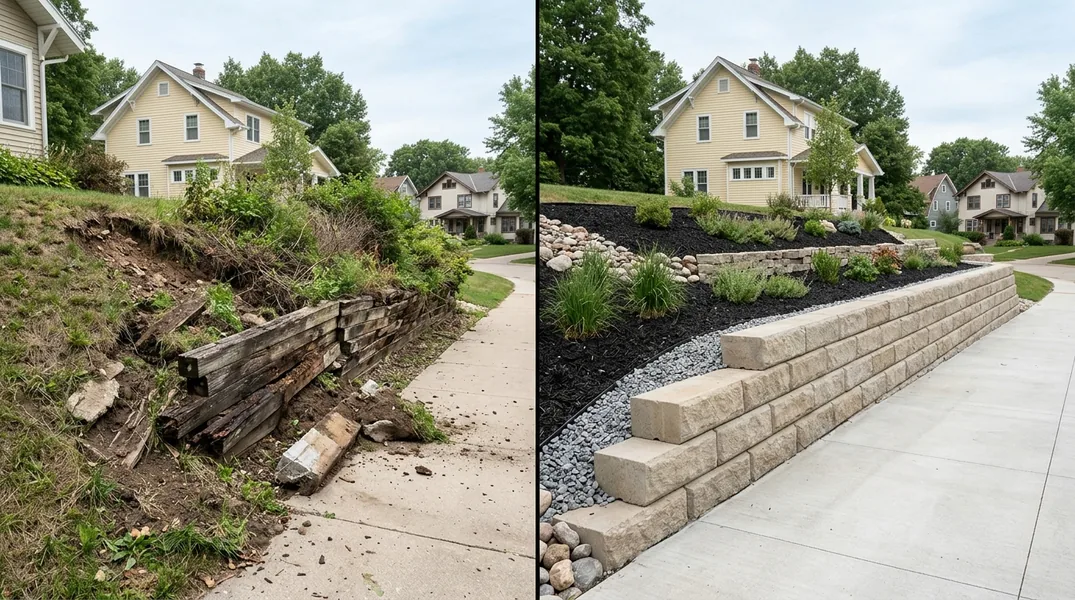
Retaining Wall Installation with block, also called a segmental retaining wall, has become the most popular choice for residential projects in Fitchburg and across the county. These systems use interlocking concrete blocks that are designed to flex slightly with the ground rather than crack. That flexibility is a huge advantage in freeze-thaw climates. The blocks are also engineered with drainage channels and pin systems that help water escape instead of building up behind the wall.
Block walls offer the best balance of cost, durability, and curb appeal. You can choose from dozens of colors and textures, from tumbled stone looks to clean modern faces, and the modular design makes them faster to install than poured concrete. The key is proper base preparation and backfill drainage, which is where experienced installers separate themselves from weekend warriors. A block wall that lacks a compacted gravel base and a perforated drain pipe will lean within a few winters, no matter how strong the blocks are. When installed correctly, a segmental wall can easily last thirty to forty years and can be repaired block by block if a section ever shifts.
Limestone Retaining Walls: Natural Beauty with Local Roots
Limestone retaining wall construction is a tradition in Wisconsin, and for good reason. Limestone is abundant in our region, it ages gracefully, and it offers a natural look that blends beautifully with native plantings and mature trees. A well-built limestone wall can be a genuine landscape feature, not just a functional barrier. Many homeowners in Middleton and older Madison neighborhoods choose limestone to match existing stonework on their property or in the surrounding area.
However, limestone is not a one-size-fits-all solution. Natural stone walls require a skilled mason to lay the stones correctly, with proper batter (a slight lean into the hillside) and adequate drainage. Poorly built stone walls can bulge or collapse under the weight of saturated clay. Limestone also varies in porosity; some types absorb more water than others, which can lead to spalling in harsh freezes. If you love the look, ask your contractor about the specific stone being used and whether a drainage membrane or geogrid reinforcement is recommended. When done right, a limestone wall can last generations, but it is not the place to cut corners.
Retaining Wall Installation Near Me: When to Call a Pro
You might be tempted to tackle a small retaining wall yourself, and for a knee-high garden border, that can work. But once a wall exceeds two or three feet in height, or if it holds back a driveway or a slope near your foundation, the stakes rise quickly. Dane County's clay soil and freeze-thaw cycles are unforgiving of mistakes. A wall that lacks proper drainage, compaction, or reinforcement can fail within a single season, and the cost to fix it often exceeds what you would have paid to have it built correctly the first time. That is when it makes sense to search for retaining wall installation near me and bring in a team that knows local soil conditions.
A professional installer will evaluate your slope, soil type, and drainage patterns before recommending a material. They will also pull any required permits and ensure the wall meets local building codes, which matters if you ever sell your home. If you already have a wall that is leaning or cracking, Retaining Wall Repair may be possible, but sometimes Retaining Wall Replacement is the safer investment. We serve homeowners throughout the area, including Sun Prairie, and we are happy to take a look and give you an honest assessment. Call (608) 910-8974 or request a free estimate to get started.
Matching the Material to Your Site and Budget
There is no single best material for every retaining wall in Dane County. A tall wall holding back a steep slope may call for reinforced concrete, while a low terrace in a backyard garden might be perfect in segmental block or limestone. Your budget, the wall's height, the amount of water it needs to manage, and the look you want all play a role. We encourage homeowners to think in terms of total cost of ownership rather than just the initial bid. A cheaper wall that needs repairs every few years can end up costing more than a durable wall that lasts decades.
It also helps to consider maintenance. Concrete and block walls generally need very little beyond occasional cleaning, while natural stone may need repointing or weed control between stones. Timber walls, which we did not cover above, are the least expensive upfront but tend to rot and fail fastest in our climate, so we rarely recommend them for structural walls. The best approach is to have a conversation with an installer who works in Madison every day and understands how local conditions affect each material. We are glad to walk you through the options and help you choose a wall that will stand up to whatever Wisconsin weather throws at it.
Looking for a professional retaining wall contractor in Madison? Madison Retaining Wall responds fast for all your retaining wall needs.
Get a Free QuoteOur services: Retaining Wall Installation · Retaining Wall Repair · Retaining Wall Replacement