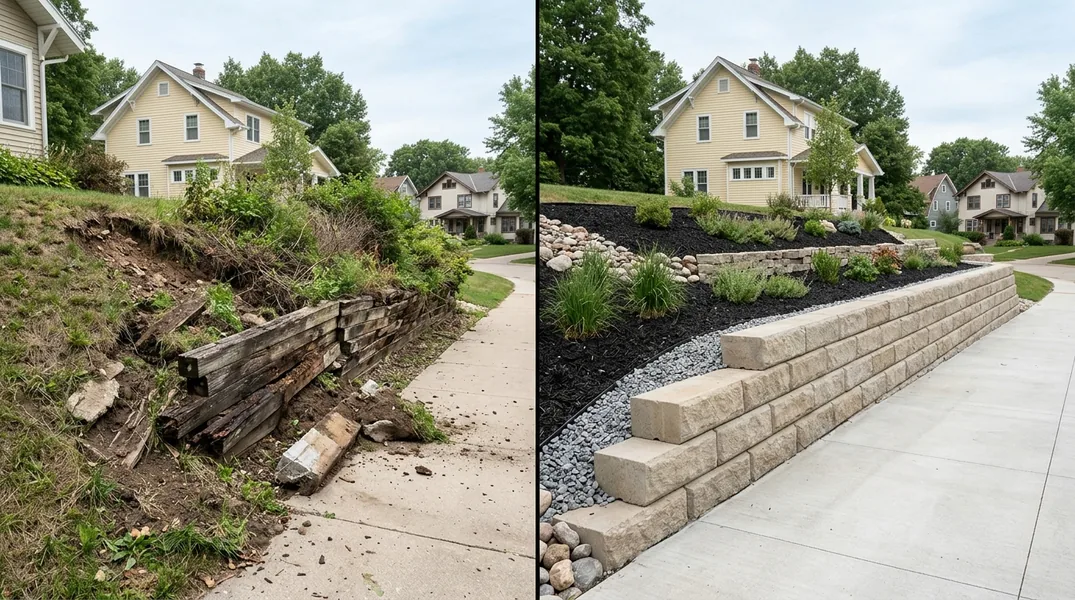
Why Retaining Walls Fail in Madison: An Overview
Retaining walls are built to hold back soil, but in Madison, they face a unique set of challenges. The city's freeze-thaw cycles, expansive clay soils, and heavy spring rains put constant stress on these structures. Over time, even well-built walls can begin to lean, bow, or crack if they were not designed for local conditions. Understanding the root causes of failure is the first step toward protecting your property and avoiding costly emergency repairs.
One of the most common reasons walls fail here is poor drainage. When water saturates the soil behind a wall, it creates hydrostatic pressure that the wall was never meant to handle. In Madison, where the ground can freeze deeply in winter and thaw rapidly in spring, that pressure can spike suddenly. Walls that lack proper weep holes, gravel backfill, or a French drain system are especially vulnerable. Another frequent culprit is inadequate foundation depth. If the base of the wall sits above the frost line, frost heave can lift and shift the entire structure, leading to a leaning retaining wall that only gets worse with each season.
Common Warning Signs of a Failing Retaining Wall
Spotting the early warning signs of a failing retaining wall can save you thousands of dollars in repairs. A wall that is beginning to bow outward is one of the clearest indicators of trouble. Bowing usually means the soil behind the wall is exerting too much pressure, often because water is not draining properly. You may also notice horizontal or vertical cracks in the wall surface, especially in Concrete Retaining Walls. Small cracks can widen quickly once water gets inside and freezes. If you see chunks of concrete or stone falling away, the structural integrity is already compromised.
Another sign to watch for is settling or tilting at the base. If the bottom of the wall is pushing outward or the top is leaning toward the street, the foundation may be undermined by water or poor compaction. You should also check for soil erosion around the base and any gaps between the wall and the soil it holds back. In some cases, you might notice water pooling behind the wall after a rainstorm, which is a strong hint that drainage is inadequate. If you live in Middleton or Fitchburg, these signs can appear faster due to similar soil and weather patterns. When you see any of these issues, it is time to call a professional for a thorough inspection.
Retaining Wall Repair Near Me: When to Call a Pro
If you have noticed a leaning retaining wall or a bowing retaining wall fix that you have been putting off, it is important to act before the problem worsens. Small issues like minor cracks or slight tilting can often be addressed with targeted Retaining Wall Repair, which may involve reinforcing the wall, improving drainage, or replacing damaged sections. However, if the wall is severely bowed, has multiple large cracks, or is showing signs of foundation failure, a full Retaining Wall Replacement may be the safer and more cost-effective solution. A professional can assess the extent of the damage and recommend the right approach for your property.
Do not wait for a wall to collapse before seeking help. In Madison, a failing wall can become a safety hazard, especially if it is holding back a slope near a driveway, patio, or foundation. A qualified contractor will check for proper drainage, soil conditions, and structural integrity. They can also tell you whether a simple repair will suffice or if a new wall is needed. If you are unsure whether your wall needs attention, reach out for a free estimate. It is better to get an expert opinion early than to face emergency repairs later.
Preventing Future Failures: What Madison Homeowners Should Know
Prevention starts with proper design and installation. If you are planning a new wall, make sure it is engineered for Madison's climate. That means a foundation that extends below the frost line, adequate drainage behind the wall, and the right materials for the job. Retaining Wall Installation done correctly from the start will save you from the headaches of premature failure. For existing walls, regular inspections and maintenance can catch small problems before they become big ones. Keep an eye on drainage, clear any debris from weep holes, and watch for changes in the wall's alignment.
It is also wise to avoid overloading the soil behind the wall with heavy plants, trees, or structures. Roots can invade the wall and cause cracking, and added weight increases pressure. In Sun Prairie and other nearby communities, homeowners should be especially mindful of water runoff from neighboring properties. If you are considering a new wall or want to know what pricing looks like for repair or replacement, contact Madison Retaining Wall at (608) 910-8974. Their team can help you understand your options and protect your investment for years to come.
Looking for a professional retaining wall contractor in Madison? Madison Retaining Wall responds fast for all your retaining wall needs.
Get a Free QuoteOur services: Retaining Wall Installation · Retaining Wall Repair · Retaining Wall Replacement